
Hear from Our Customers
Your driveway problems end here. No more muddy ruts during Tennessee’s rainy seasons. No more loose gravel washing away every storm. No more watching your investment disappear with the next heavy rain.
Tar and chip paving gives you a stable, textured surface that handles everything from daily traffic to heavy downpours. The stone chips embed directly into hot asphalt, creating a bond that won’t shift or wash out like loose gravel. You’re not just getting a surface—you’re getting peace of mind.
You get immediate access. Drive on it the same day. Plus, the natural texture provides the kind of traction that keeps you and your family safe during wet weather, something smooth surfaces just can’t match.
We bring over five decades of paving experience to every Carthage project. As a veteran-owned business based in Wilson County, we understand exactly what Tennessee driveways face—and what they need to survive.
The local clay soils that turn to soup when wet. The seasonal freeze-thaw cycles that crack weaker surfaces. The unpredictable weather patterns that challenge other contractors. That’s everyday business for our team.
When you’re dealing with rural properties, long driveways, and the kind of weather that can turn a gravel drive into a muddy mess overnight, experience matters. We deliver that experience with every project, backed by the kind of local knowledge you can’t get from out-of-town crews.

The tar and chip process starts with proper site preparation—the foundation of any lasting driveway. Your existing surface gets cleaned and graded to ensure proper drainage, which is critical in Tennessee’s wet climate. Skip this step, and you’ll have problems later.
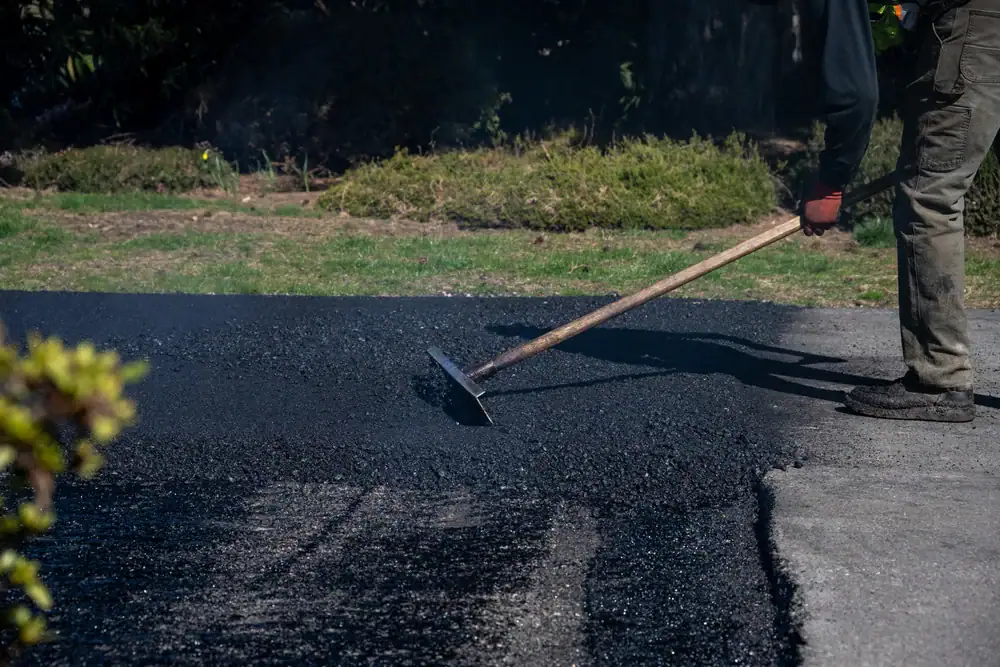
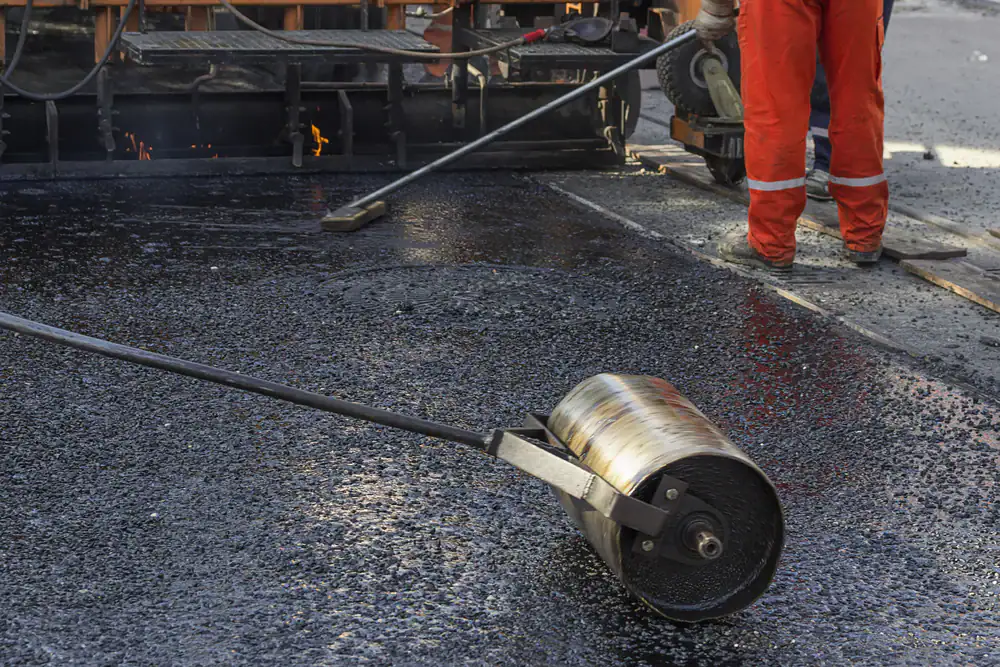
Next comes the hot liquid asphalt application. This isn’t the pre-mixed stuff you see elsewhere. The asphalt gets heated to around 300 degrees and sprayed evenly across your prepared surface. Temperature and timing matter here—get either wrong, and the bond fails.
Stone chips go down immediately while the asphalt is still hot. These aren’t just scattered on top like gravel. They get rolled and compacted into the hot tar, creating a mechanical bond that locks everything together. The result is a textured surface that’s ready to drive on right away, with none of the curing time traditional asphalt requires.

Ready to get started?
Carthage sits in Smith County where rural properties often feature long driveways that take a beating from Tennessee weather. The area’s clay subsoils and seasonal moisture create specific challenges that generic paving approaches simply can’t handle.
Tar and chip paving works particularly well here because the textured surface allows water to drain naturally instead of pooling. During Middle Tennessee’s wet seasons—and you know how unpredictable those can be—this drainage advantage prevents the washouts and rutting that plague other surface types.
The stone variety options let you match your driveway to the natural landscape around Carthage. Whether you prefer traditional gray aggregate or want something that complements your property’s aesthetic, the customization options work with the area’s rural character rather than against it. You get function and form that actually fits your setting.

Tar and chip paving typically costs $2-5 per square foot in the Carthage area, which is 30-40% less than traditional asphalt installation. For a standard residential driveway, you’re looking at savings of several thousand dollars compared to asphalt—money that stays in your pocket.
The cost advantage goes beyond just installation. Tar and chip surfaces don’t require the regular sealcoating that asphalt needs every 3-5 years. That’s $500-1,500 in maintenance costs you won’t have to budget for repeatedly. Over the life of your driveway, this maintenance difference adds up to significant additional savings.
Keep in mind that pricing depends on factors like driveway size, stone type selection, and site preparation requirements. Properties with challenging drainage or difficult access may require additional prep work, but even with these factors, tar and chip remains the more budget-friendly option for most Carthage homeowners.
A properly installed tar and chip driveway lasts 7-10 years in Tennessee’s climate before needing attention. This timeframe accounts for the freeze-thaw cycles, heavy rainfall, and temperature swings that Middle Tennessee experiences throughout the year.
The textured surface actually helps extend the lifespan because it handles water drainage better than smooth surfaces. Instead of water sitting on top and eventually penetrating cracks, the stone texture allows moisture to move off the surface naturally. Less standing water means less damage over time.
When maintenance is needed after 7-10 years, you don’t have to tear everything out and start over like with traditional asphalt. Another layer of tar and chip can be applied right over the existing surface, essentially renewing your driveway at a fraction of the cost of complete replacement.
Yes, tar and chip can often be installed over existing gravel driveways, provided the base is stable and properly graded. This is actually one of the most cost-effective ways to upgrade from loose gravel to a bound surface that won’t wash away.
The existing gravel essentially becomes part of your base layer. The hot asphalt penetrates into the gravel bed, and the new stone chips create the finished driving surface. This approach saves you money on excavation and new base materials while giving you a dramatically better result.
However, if your gravel driveway has drainage problems, significant rutting, or an unstable base, some preparation work will be needed first. A proper site evaluation determines exactly what prep work is required to ensure your new tar and chip surface performs properly for years to come.
Tar and chip driveways require minimal maintenance compared to other paving options. The main tasks are occasional sweeping to remove debris and prompt repair of any cracks or potholes that develop over time. That’s it—no complex maintenance schedules or expensive treatments.
Unlike asphalt, tar and chip surfaces don’t need regular sealcoating. The stone chips are already embedded in the asphalt binder, so there’s no separate seal coat that wears away and needs renewal every few years. This eliminates the biggest ongoing maintenance expense of traditional asphalt.
The textured surface naturally resists some types of damage that affect smooth pavements. However, avoiding sharp turns and minimizing heavy vehicle traffic helps prevent stone displacement. With basic care—the kind of attention you’d give any driveway—your tar and chip surface maintains its functionality and appearance with very little intervention.
Tar and chip paving works well on moderate slopes and can handle steeper grades better than loose gravel. The textured surface provides excellent traction, which is particularly beneficial on inclined driveways during wet conditions—a real advantage in Tennessee’s unpredictable weather.
The key factor is proper installation technique. On steeper slopes, the hot asphalt application and stone chip placement require careful attention to ensure even coverage and proper bonding. Experienced contractors know how to adjust their approach for sloped installations, preventing the runoff issues that can affect other methods.
For very steep driveways, additional considerations like drainage management and stone chip size selection become important. The rough texture that makes tar and chip ideal for traction can be optimized further for steep grade applications, giving you a surface that’s both safe and durable on challenging terrain.
You can drive on a tar and chip driveway immediately after installation is complete. Unlike traditional asphalt that requires 24-48 hours of curing time, tar and chip surfaces are ready for traffic as soon as the final rolling is finished. No waiting, no scheduling around cure times.
This immediate accessibility is possible because the installation process creates a mechanical bond rather than relying on chemical curing. The stone chips get pressed into the hot asphalt and lock in place right away, creating a stable driving surface that can handle normal traffic immediately.
The only precaution during the first few days is avoiding sharp turns or aggressive braking that might dislodge loose stones. Any excess chips that didn’t bond properly will work their way to the edges naturally over the first week or two, leaving you with a smooth, stable surface that’s ready for normal use.
Other Services we provide in Carthage