

Hear from Our Customers
You’re not looking for the cheapest quote. You’re looking for a driveway that doesn’t crack apart in two years or a parking lot that actually handles Tennessee weather without turning into a liability.
That’s what proper asphalt paving gets you. A smooth surface that drains right, holds up to traffic, and doesn’t need constant patching. It means pulling into your driveway without wincing at potholes, or running a business where customers aren’t dodging cracks in your lot.
When the base is compacted correctly and the asphalt is laid at the right thickness, you’re looking at 15 to 20 years of use—sometimes more with basic sealcoating every few years. That’s the difference between an investment and a redo.
Tristar Paving LLC is based in Wilson County and has been serving the Nashville area—including Ashland City and all of Cheatham County—for over 50 years. We’re veteran-owned, which means the work ethic isn’t negotiable and neither is the quality.
We handle both residential driveways and commercial parking lots. Whether you’re a homeowner tired of looking at a cracked driveway or a business owner who needs a lot that’s safe and presentable, we’ve done it hundreds of times.
Ashland City sits right on the Cumberland River with small-town character and easy access to Nashville. Properties here deserve paving that matches the care people put into their homes and businesses—and that’s exactly what we deliver.

First, the site gets prepped. That means grading the area so water drains away from your foundation, not toward it. If there’s old asphalt or concrete, it gets removed and hauled off. If the ground is soft or uneven, it gets compacted with a solid base layer—usually gravel or crushed stone.
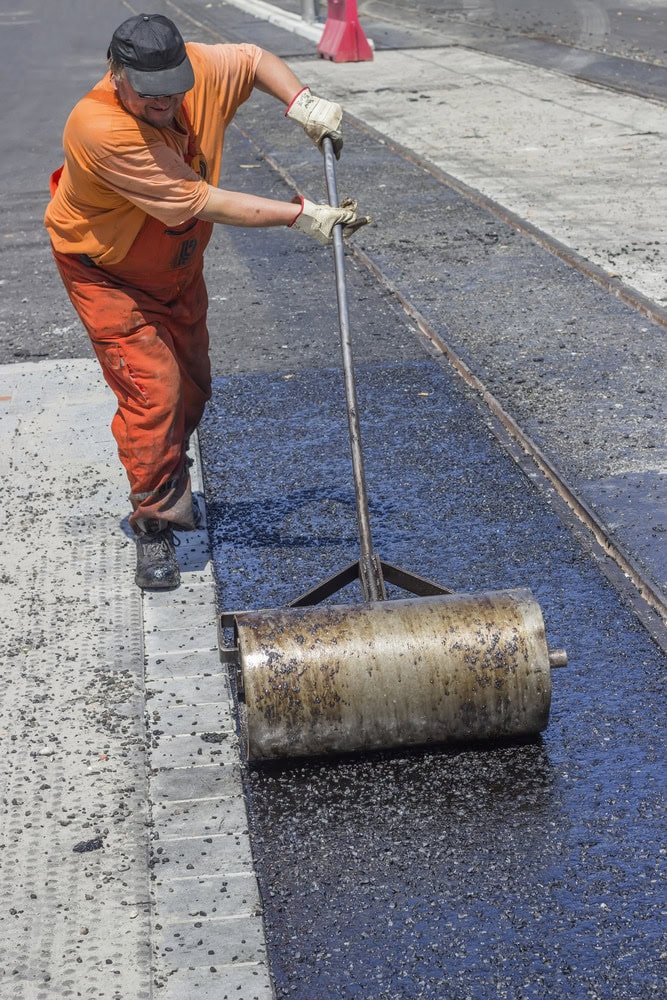
Then comes the asphalt. It’s delivered hot, spread evenly, and compacted with a roller while it’s still pliable. Thickness matters. For a residential driveway, you’re typically looking at 3 to 4 inches. For commercial lots with heavier traffic, it might be thicker.
Once it’s down, it needs time to cure. You can usually walk on it within a day, but you’ll want to wait 2 to 3 days before driving on it. After that, it’s ready to handle whatever you throw at it—rain, heat, freeze-thaw cycles, daily use.

Ready to get started?
You get a full-service paving contractor. That means driveway paving for homes, parking lot construction for businesses, asphalt repairs, and tar & chip installations if that’s a better fit for your property or budget.
In Ashland City, you’re dealing with Tennessee weather—hot summers, wet springs, and occasional freezes. Proper paving accounts for that. The asphalt mix needs to handle temperature swings without cracking. The base needs to support the load without settling. The grading needs to move water off the surface so it doesn’t pool and seep underneath.
We also understand the local soil conditions around Cheatham County. Some areas need more base prep than others. Some driveways need better drainage solutions because of how the property slopes. That’s the kind of thing you only know from doing this work in the area for decades.
You also get straightforward communication. No disappearing after the estimate. No surprise charges halfway through. Just clear timelines, honest pricing, and work that gets finished the way it’s supposed to.

For a standard residential driveway in the Ashland City area, you’re typically looking at $4 to $6 per square foot for 3 to 4 inches of asphalt, including demolition of old pavement if needed. That puts a two-car driveway around $3,500 to $6,200 depending on size and site conditions.
If you’re overlaying existing asphalt that’s still in decent shape, the cost drops because there’s no demolition and you’re using less material. But if your current driveway is full of cracks and settling, an overlay just kicks the problem down the road a year or two.
The final price depends on how much prep work is needed, whether drainage needs to be addressed, and how accessible your property is. A straight, flat driveway costs less than one with curves, slopes, or tricky access. Get a detailed estimate that breaks down what’s included so you know exactly what you’re paying for.
A properly installed asphalt driveway in Tennessee typically lasts 15 to 20 years, sometimes longer with regular maintenance. The key word there is “properly installed.” If the base isn’t compacted right or the asphalt is too thin, you’ll start seeing problems in just a few years.
Tennessee’s climate—hot summers, wet weather, and occasional freezes—puts stress on asphalt. Water is the enemy. If it gets under the surface through cracks, it weakens the base and causes more cracking. That’s why sealcoating every 3 to 5 years is worth it. It fills small cracks before they become big ones and protects the surface from UV damage and water penetration.
Commercial parking lots with heavier traffic might need resurfacing sooner, but a well-maintained lot can still give you a solid 15 years before needing major work. Bottom line: the lifespan depends on the quality of the install and how well you take care of it after.
Asphalt paving uses hot-mix asphalt that’s heated, delivered, spread, and compacted into a smooth, solid surface. It’s durable, handles heavy traffic well, and gives you that classic blacktop look. It’s the standard choice for driveways and parking lots.
Tar and chip is a different process. A layer of liquid asphalt (tar) is applied to the surface, then stone chips are spread on top and rolled in. It creates a textured, rustic look that some people prefer, especially for long country driveways. It’s usually less expensive than traditional asphalt and can be a good option if you’re working with a tighter budget.
The trade-off is durability and smoothness. Tar and chip doesn’t hold up to heavy traffic as well as asphalt, and it’s not as smooth. Loose stones can come off over time. For a residential driveway with light use, it works fine. For a commercial lot or high-traffic area, traditional asphalt paving is the better choice.
You can pave over existing asphalt if it’s in decent shape—meaning no major cracks, potholes, or significant settling. An overlay adds a fresh layer of asphalt on top, usually 2 to 3 inches thick. It’s less expensive than a full replacement because there’s no demolition or disposal, and it can buy you another 10 to 15 years if the base underneath is still solid.
Paving over concrete is trickier. Concrete expands and contracts differently than asphalt, which means cracks in the concrete will eventually telegraph through the asphalt layer on top. It can work as a short-term fix, but it’s not a long-term solution. We typically recommend removing the concrete first if you want results that last.
If your current driveway has widespread cracking, potholes, or areas that are sinking, an overlay won’t fix the underlying problem. You’re better off removing it, fixing the base, and starting fresh. We’ll tell you honestly whether an overlay makes sense or if you’re just throwing money at a surface that needs to be replaced.
Start with experience. You want a contractor who’s been doing this for years and has a track record in the area. Paving isn’t something you want to trust to someone learning on the job. Ask how long they’ve been in business and whether they handle both residential and commercial work.
Get a detailed written estimate that breaks down the cost—materials, labor, site prep, disposal, everything. If the estimate is vague or just a total number with no explanation, that’s a red flag. You should know exactly what you’re paying for and what’s included.
Check that they’re insured and licensed. If something goes wrong or someone gets hurt on your property, you don’t want to be on the hook. Ask about their process—how they prep the site, what thickness of asphalt they use, how long the project takes, and when you can use the driveway after it’s done. A professional contractor will answer all of that clearly without dodging questions or rushing you off the phone.
Not right away. New asphalt needs time to cure fully before you seal it—usually 6 months to a year depending on weather and usage. Sealing too early can trap oils in the asphalt that need to evaporate, which actually weakens the surface.
After that first year, sealcoating every 3 to 5 years is one of the best things you can do to extend the life of your driveway. It fills in small cracks before they get worse, protects against UV damage from the sun, and creates a barrier against water, oil, and gas spills. Think of it like changing the oil in your car—it’s basic maintenance that prevents bigger problems down the road.
If you skip sealcoating, your driveway will still function, but it’ll age faster. Cracks will spread, the surface will fade and oxidize, and water will work its way underneath. A $200 sealcoat every few years can save you thousands in repairs or early replacement. It’s not required, but it’s smart.
Other Services we provide in Ashland City