
Hear from Our Customers
A smooth, well-maintained parking lot does more than look good. It keeps customers safe, reduces liability, and tells people you care about the details before they ever walk through your door.
When your asphalt starts cracking or your striping fades, it doesn’t just look bad. It becomes a safety issue. Potholes damage vehicles. Uneven surfaces trip pedestrians. Faded lines create confusion and parking chaos. All of that reflects on your business, whether you’re running a retail shop, restaurant, office building, or warehouse in Ashland City.
The right commercial paving contractor fixes that. You get a parking lot that handles the weather, the traffic, and the years ahead without constant repairs. You get clear striping that keeps things organized. You get a surface that drains properly so water doesn’t pool and crack your investment from underneath. That’s what matters when you’re trying to run a business and not babysit your pavement.
TriStar Paving is a veteran-owned asphalt paving company based in Wilson County, Tennessee. We’ve been serving commercial and residential clients across the Nashville area for over 50 years, and that includes plenty of work right here in Ashland City and Cheatham County.
We know what Middle Tennessee weather does to asphalt. The freeze-thaw cycles, the summer heat, the rain that finds every weak spot. We’ve seen it all and know how to build parking lots and driveways that hold up under real-world conditions. Our focus is on doing the job right from the start so businesses aren’t dealing with premature failures or constant repair bills.
Ashland City is growing. Commercial development is picking up along State Route 12, and new businesses are opening as the area continues to attract people from Nashville and beyond. We understand what local business owners need: reliable service, quality work, and a contractor who shows up when they say they will and finishes the job without drama.

The process starts with an on-site evaluation. Someone from our team comes out to look at your property, measure the area, check the existing conditions, and talk through what you need. This isn’t a quick glance from the truck. It’s a real assessment that looks at drainage, base stability, traffic patterns, and any site-specific issues that could affect the project.
Once the scope is clear, you get a detailed estimate that breaks down the work and the cost. No surprises, no vague line items. You know what you’re paying for and what to expect.
When the project starts, our crew prepares the site properly. That means grading for drainage, compacting the base, and making sure the foundation is solid before any asphalt goes down. Cutting corners here is how parking lots fail early, and we don’t do that. The asphalt gets laid at the right temperature, compacted correctly, and finished smooth. If striping is part of the job, that happens once the surface has cured properly.
The timeline depends on the size and complexity of the project, but we work efficiently to minimize disruption to your business. You’re kept in the loop throughout the process so you know what’s happening and when things will wrap up. Once the job is done, you’re left with a parking lot or driveway that’s ready to handle whatever you throw at it.

Ready to get started?
Commercial paving covers more than just laying asphalt. It includes everything needed to create a functional, safe, and long-lasting surface for your business.
New parking lot construction starts with site preparation. The ground gets graded and compacted to create a stable base that won’t shift or settle. Proper drainage is built in so water flows away from the pavement instead of pooling and causing damage. Then the asphalt is installed in layers, compacted, and finished to create a smooth, durable surface.
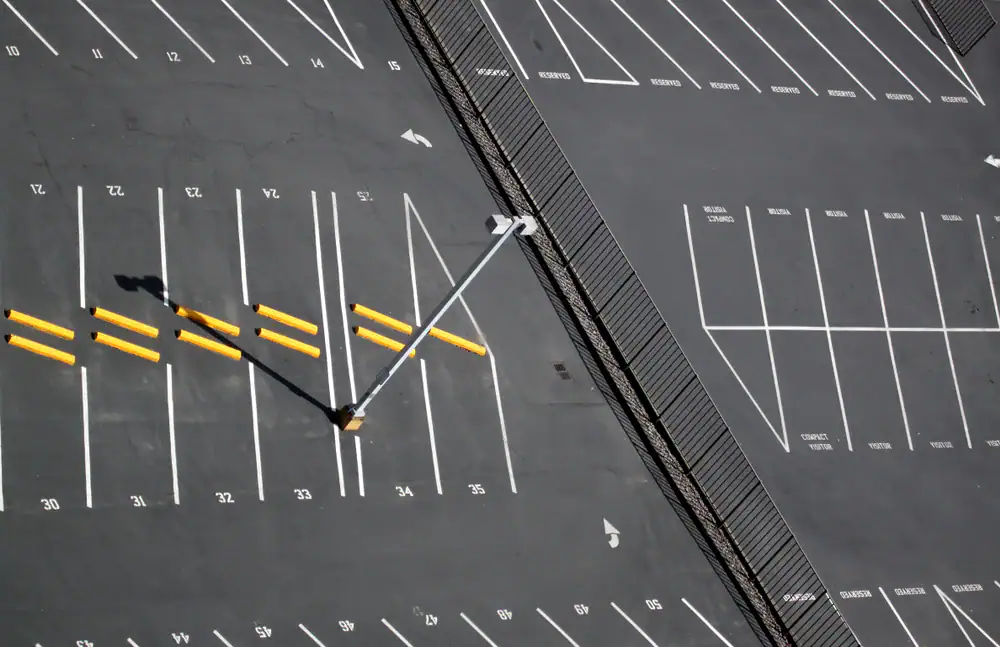
Parking lot striping is another critical piece. Clear, ADA-compliant lines keep traffic organized, designate accessible spaces, and reduce confusion. Ashland City businesses need striping that meets local codes and keeps customers and employees safe.
Asphalt maintenance services help extend the life of your pavement. Sealcoating protects the surface from UV damage, water infiltration, and chemical spills. Crack sealing stops small issues before they turn into potholes. Patching and repair work fixes problem areas without needing a full replacement. These services are especially important in Middle Tennessee, where temperature swings and wet weather accelerate wear and tear.
We also handle tar and chip paving, which combines crushed stone and liquid asphalt for a durable, natural-looking surface. It’s a cost-effective option that requires less maintenance than traditional asphalt and offers excellent traction. For some Ashland City properties, especially those with a more rustic aesthetic or rural setting, tar and chip is the right fit.

The timeline depends on the size of the lot and the scope of work. A small parking lot for a retail shop or office building might take a few days from start to finish. Larger commercial properties with extensive site prep, drainage work, or multiple phases can take a week or more.
Weather plays a role too. Asphalt needs to be installed in dry conditions and at the right temperature to cure properly. If rain is in the forecast, the project might get delayed a day or two. We schedule projects with realistic timelines and keep clients updated if anything changes.
Most businesses want to minimize disruption, and that’s taken into account during planning. Work can often be phased so parts of the lot remain accessible while other sections are being paved. The goal is to get the job done efficiently without shutting down your operations completely.
Asphalt repair addresses specific problem areas without tearing out the entire surface. If you’ve got a few potholes, some cracking, or isolated sections where the pavement has failed, patching and repair work can fix those spots and extend the life of the rest of the lot. It’s a cost-effective option when the majority of your pavement is still in good shape.
Full replacement is necessary when the damage is widespread or when the base underneath the asphalt has failed. If your parking lot has extensive cracking, significant settling, or drainage issues that are causing repeated failures, patching won’t solve the underlying problem. In those cases, the old asphalt gets removed, the base is rebuilt properly, and new asphalt is installed.
We’ll tell you honestly which option makes sense. Sometimes repair work buys you a few more years before you need a full replacement. Other times, continuing to patch a failing lot just throws money away. We evaluate the condition of your pavement and give you a straight answer about what’s worth doing.
Most commercial parking lots in Middle Tennessee should be sealcoated every two to three years. The exact timing depends on traffic volume, sun exposure, and how well the lot was maintained previously.
Sealcoating protects asphalt from UV rays, water infiltration, and chemical damage from gas and oil spills. It also fills in minor surface imperfections and gives the pavement a fresh, uniform appearance. Without it, asphalt oxidizes and becomes brittle, which leads to cracking and premature failure.
If your parking lot sees heavy traffic or sits in full sun most of the day, you might need to sealcoat more frequently. Lighter-use lots in shaded areas can sometimes stretch it to three or four years. The key is not to wait until the asphalt is already cracking and deteriorating. By then, you’re looking at repairs in addition to sealcoating, and the damage might already be done.
Regular sealcoating is one of the most cost-effective ways to extend the life of your pavement. It’s a fraction of the cost of repaving, and it can add years to your parking lot’s lifespan.
Yes. ADA compliance isn’t optional for commercial parking lots, and we make sure striping meets the requirements. That includes properly sized accessible parking spaces, correct signage placement, access aisles, and van-accessible spots where needed.
The number of accessible spaces required depends on the total size of your parking lot. There are specific measurements for space width, aisle width, and slope that have to be met. The striping also needs to be clearly visible and maintained over time as it fades.
Getting this wrong can create liability issues and result in fines. More importantly, it makes your property inaccessible to customers and employees who need those spaces. We know the regulations and handle the striping correctly from the start. If your existing striping has faded or doesn’t meet current standards, that can be corrected as part of a maintenance project or a full re-striping.
The most common cause is poor site preparation. If the base isn’t compacted properly or if drainage isn’t built in correctly, the pavement will fail no matter how good the asphalt is. Water is the enemy. When it gets underneath the asphalt, it weakens the base, causes settling, and leads to cracking and potholes.
Tennessee weather accelerates the process. Freeze-thaw cycles cause water trapped in cracks to expand and contract, which breaks the pavement apart. Summer heat softens asphalt, and heavy traffic can create ruts and depressions. Rain and humidity speed up oxidation, which makes the asphalt brittle.
Lack of maintenance is another big factor. Parking lots that never get sealcoated or have cracks sealed deteriorate much faster than lots that receive regular care. Small cracks turn into big cracks, which turn into potholes, which eventually require expensive repairs or full replacement.
Choosing a contractor who cuts corners is the other major issue. Using substandard materials, skipping steps in the installation process, or laying asphalt in poor weather conditions all lead to premature failure. We’ve seen plenty of parking lots that failed within a few years because someone else did the work wrong. Doing it right from the start costs less in the long run.
Yes, and it’s a common approach for larger properties or businesses working within a budget. Phasing allows you to spread the cost over time while still addressing the most critical areas first.
For example, if part of your parking lot is in worse shape than the rest, that section can be repaved first while other areas are maintained with sealcoating and crack repair. Or if you’re expanding your business and need additional parking, the new section can be added separately from renovating the existing lot.
Phasing also helps minimize disruption to your operations. Instead of closing the entire parking lot at once, work is completed in sections so customers and employees still have access. We work with business owners to develop a phased plan that makes sense financially and operationally.
The key is to have a clear strategy so the work fits together properly. Each phase needs to be done right so it integrates with the rest of the lot and doesn’t create drainage or transition issues. That requires planning and experience, which is where working with a knowledgeable paving contractor makes a difference.
Other Services we provide in Ashland City