
Hear from Our Customers
You’re looking at a driveway that costs 30-40% less than traditional asphalt but still holds up for 7-10 years. That’s real savings when you’re paving a quarter-mile access road or a sprawling estate driveway.
The stone surface gives you better traction in wet weather and winter ice. No slipping around when it rains. No worrying about your car sliding on a steep grade.
And here’s the part most people don’t realize until later: you won’t be sealcoating every few years. Tar and chip doesn’t need it. The maintenance you’d normally budget for asphalt? You can skip most of it. That adds up over time, especially when you’re managing a large property with multiple paved areas.
We bring over 50 years of combined experience to every tar and chip project in College Grove, TN and the surrounding Nashville area. We’re veteran-owned and based right here in Wilson County, which means we understand the local terrain, the weather patterns, and what actually works on rural Tennessee properties.
Tar and chip isn’t something every paving company offers. It requires specific equipment, timing, and technique. We specialize in this type of work for both residential and commercial clients. Our crew knows how to prep the base, apply the hot asphalt at the right temperature, and roll the stone in properly so it bonds and lasts.
College Grove properties often come with long driveways, acreage, and a preference for that country aesthetic. Our approach fits that environment—quality work that complements the rural character without the urban price tag.

First, we prepare your base. If you have existing gravel in good condition, that can often be used. If not, a compacted gravel base gets installed to create a stable foundation.
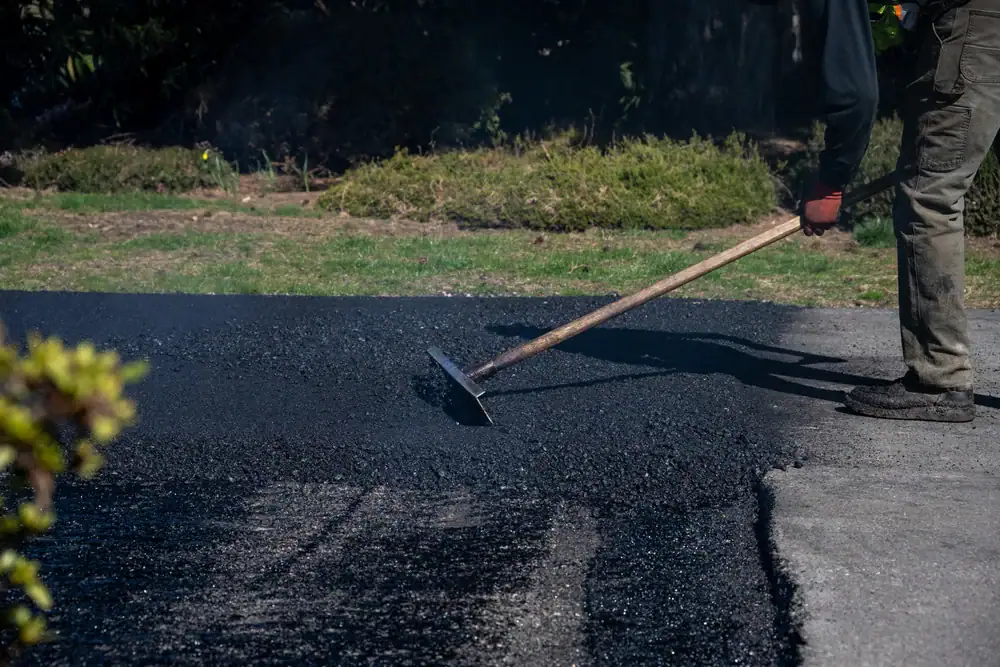
Next comes the hot liquid asphalt. This gets applied evenly across the surface while it’s still hot—timing matters here. Right after the asphalt goes down, a layer of stone chips gets spread over the top. The size and color of the stone can be customized based on what you want the finished driveway to look like.
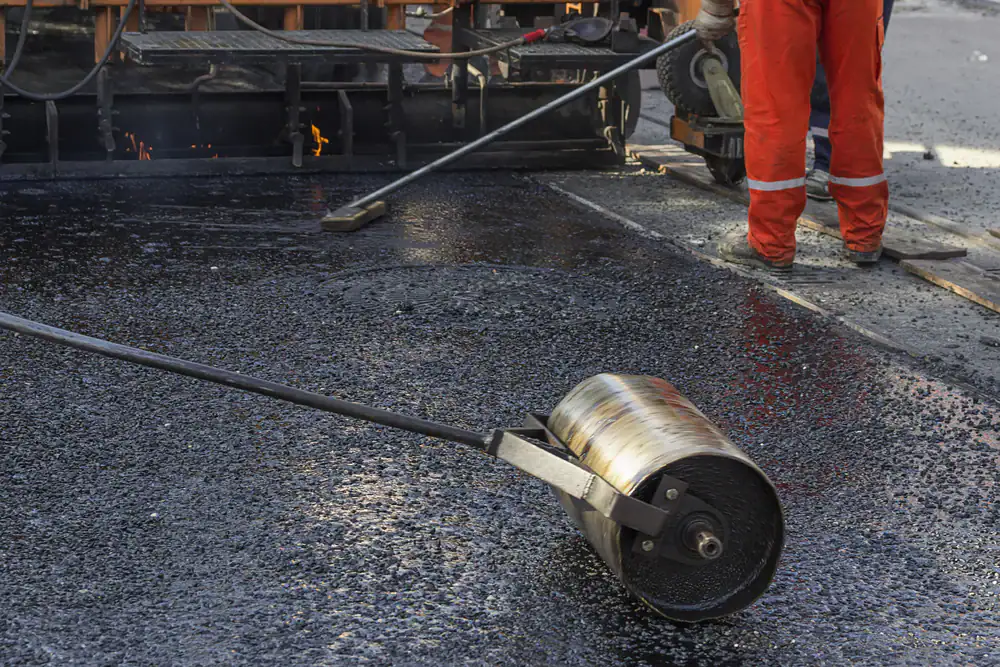
Then a heavy roller compacts everything together. The stone embeds into the hot asphalt, creating that textured, locked-in surface. Loose stone gets swept away, and you’re left with a durable, rustic-looking driveway.
The whole process moves faster than traditional asphalt paving. Less disruption to your property. Less time waiting to use your driveway. And because tar and chip can be applied in layers, if you ever need a refresh down the road, another layer can go right over the existing surface—no need to tear everything out and start over.

Ready to get started?
College Grove sits in the heart of Williamson County’s rolling farmland. Properties here tend to be larger, with long access roads and driveways that wind through acreage. That’s exactly where tar and chip makes the most sense.
When you’re paving 500, 800, or 1,000+ feet of driveway, the cost difference between asphalt and tar and chip becomes significant. You’re talking thousands of dollars in savings without sacrificing the functionality you need. The textured stone surface also fits the aesthetic of the area—it looks natural, not industrial. It complements the farmhouse style, the equestrian properties, and the custom estates that define this part of Tennessee.
The climate here plays a role too. Tennessee gets rain, ice, and temperature swings. Tar and chip handles that well. The surface is less prone to the cracking you see with smooth asphalt during freeze-thaw cycles. And that texture? It gives your tires something to grip when conditions get slick.
We work with homeowners throughout College Grove who want a driveway that looks right, performs well, and doesn’t drain the budget. Whether you’re building new construction, replacing an old gravel drive, or resurfacing worn asphalt, tar and chip paving offers a practical solution that’s been proven for over a century.

Tar and chip typically costs between $2 and $5 per square foot, while traditional asphalt runs $2.50 to $4.50 per square foot or higher. That might not sound like a huge difference until you calculate it across a long driveway.
For a 1,000 square foot driveway, you’re looking at $2,000 to $5,000 for tar and chip versus $2,500 to $4,500+ for asphalt. But most College Grove properties have driveways much longer than that. When you’re paving 2,000, 3,000, or even 5,000 square feet, the savings add up quickly—often 30-40% less than asphalt. That difference can be several thousand dollars, which is significant for rural properties with long access roads or multiple paved areas like turnarounds and parking pads.
A properly installed tar and chip driveway typically lasts 7 to 10 years before it needs another layer. That’s shorter than asphalt’s 20-30 year lifespan, but there’s an important difference: maintenance costs.
Asphalt requires sealcoating every 3-5 years to protect it from weather damage. Each sealcoating job costs money and takes time. Tar and chip doesn’t need that. The stone surface protects the asphalt underneath naturally, so you skip those recurring maintenance expenses. When your tar and chip surface does need attention after 7-10 years, you can often just add another layer on top rather than tearing everything out. That keeps the cost down and extends the life of your driveway without a full replacement.
Tennessee’s freeze-thaw cycles, rain, and temperature swings can be tough on driveways. Tar and chip holds up well because the textured surface is less prone to the cracking you see with smooth asphalt.
Yes, in many cases tar and chip can be applied directly over an existing gravel driveway, as long as the gravel base is in good condition. The gravel needs to be properly compacted and stable—not loose or rutted.
If your gravel driveway has been in place for a while and has settled well, it can serve as the foundation for tar and chip paving. This saves you the cost and time of removing the old material and starting from scratch. We’ll evaluate the condition of your existing gravel, make any necessary adjustments to level and compact it, and then apply the hot asphalt and stone chips on top.
If the gravel is in poor condition—lots of potholes, uneven areas, or drainage issues—it may need to be regraded or additional gravel added before tar and chip can be applied. We’ll assess your specific situation and let you know what prep work is needed to ensure a durable, long-lasting result. The goal is to give you a solid base so the tar and chip surface performs the way it should for years to come.
Tar and chip is ideal for long driveways and large properties—it’s one of the main reasons rural homeowners choose it. When you’re paving a quarter-mile access road or a winding driveway through acreage, the cost savings over asphalt become substantial.
The installation process is also faster than traditional asphalt, which means less disruption to your property. For homeowners in College Grove with estates, horse farms, or properties with multiple buildings, tar and chip provides a cost-effective way to pave larger areas without sacrificing quality or durability.
The rustic, natural appearance of tar and chip also fits the aesthetic of rural properties better than smooth black asphalt. It blends with the landscape and complements farmhouse architecture, barns, and the rolling countryside that defines this area. You get a functional, durable surface that looks like it belongs on your property—not like a commercial parking lot.
No, tar and chip actually provides better traction than smooth asphalt, especially in wet or icy conditions. The stone chips embedded in the surface create a textured finish that gives tires and shoes something to grip.
This is a real advantage in Tennessee, where you deal with rain, occasional ice, and temperature swings throughout the year. Smooth asphalt can get slick when wet. Tar and chip doesn’t have that problem. The rough texture helps prevent slipping whether you’re driving or walking on it.
That said, you do need to be careful with snow removal. Using a metal plow blade can damage the stone surface. A snowblower or plastic-edged shovel works better for clearing snow off a tar and chip driveway. The textured surface itself helps with traction during winter weather, so you’re less likely to need salt or sand compared to a smooth asphalt driveway.
Tar and chip requires specialized equipment, specific timing, and experience that not all paving contractors have. The process involves applying hot liquid asphalt and immediately spreading stone chips while the asphalt is still at the right temperature. If the timing or technique is off, the stone won’t bond properly and the surface won’t last.
Most paving companies focus on standard hot mix asphalt because it’s more common and the process is more straightforward. Tar and chip is a specialty service that takes knowledge and practice to do correctly. That’s why it’s important to work with a contractor who has actual experience with this type of paving—not someone trying it for the first time on your property.
We’ve been doing tar and chip installations for years across the Nashville area and College Grove. Our crew knows the right materials, the proper application process, and how to handle the variables that come up on different properties. That experience matters when you’re investing in a driveway that needs to perform well for the next decade.
Other Services we provide in College Grove