

Hear from Our Customers
A driveway shouldn’t need constant patching. It shouldn’t pool water every time it rains. And it definitely shouldn’t start falling apart two years in.
When asphalt paving is installed correctly—with proper grading, solid drainage, and materials that match Tennessee’s climate—it lasts. You get a smooth surface that handles your vehicles without cracking under pressure. Water runs off instead of seeping into the base and causing problems later. Ice melts faster in winter because asphalt absorbs heat.
You also get your time back. No more coordinating repairs every season or worrying about someone tripping on uneven pavement. Just a durable surface that does its job for 20 to 30 years with basic maintenance. That’s what proper asphalt paving looks like in Angeltown.
We’ve been working in Wilson County and the surrounding Nashville area for over five decades. Tristar Paving is veteran-owned, which means discipline and follow-through aren’t just buzzwords—they’re built into how we operate.
Angeltown sits in an area where homes are owner-occupied, properties are well-maintained, and people expect work to be done right the first time. We understand that. Our crew knows Tennessee weather—the summer heat that softens asphalt and the winter freezes that crack weak installations. We account for it in every project, from residential driveways to commercial parking lots.
We’re not a company that shows up, pours some asphalt, and disappears. We’re a local business that’s been serving this community long enough to know that reputation matters more than shortcuts.

First, the site gets assessed. We look at drainage, measure the area, check the existing surface if there is one, and identify any grading issues that could cause water problems down the line.
Next comes site preparation. If you’re replacing an old driveway, the damaged material gets removed. The ground is graded so water flows away from your home and doesn’t pool on the pavement. A solid base layer is installed and compacted—this is what keeps your driveway stable for decades.
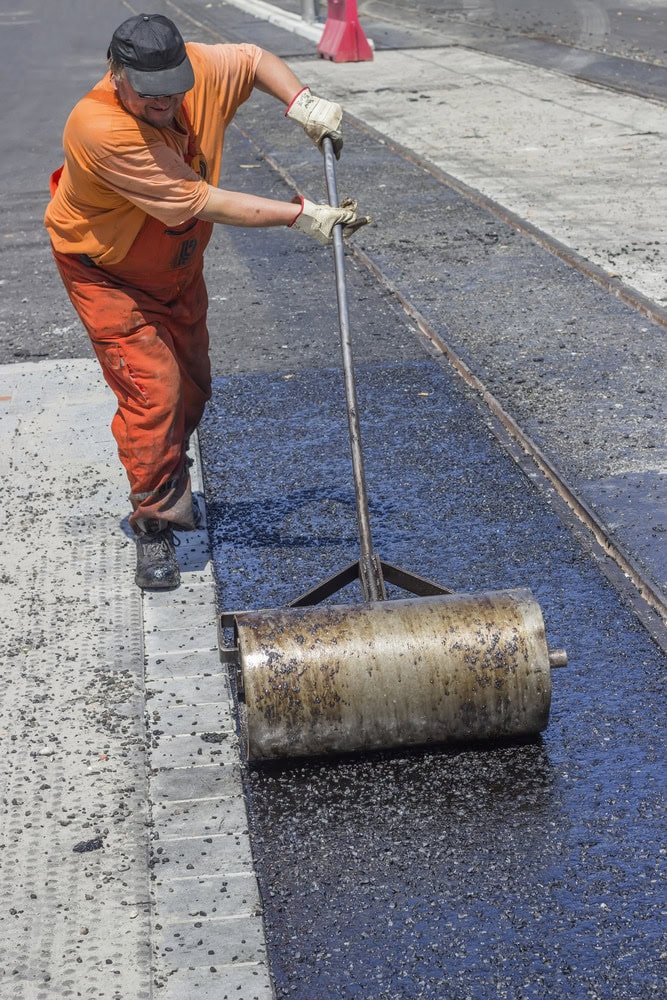
Then the asphalt goes down. High-quality hot-mix asphalt is applied at the right thickness for your needs—typically 3 to 4 inches for residential driveways. It’s compacted properly to eliminate air pockets and create a smooth, dense surface. Most driveway projects in Angeltown take one to two days, depending on size and complexity.
After installation, you wait 24 to 48 hours before driving on it. That’s it. Once it’s cured, you’ve got a driveway that’s ready to handle daily use. Add sealcoating every few years, and you’re looking at 20 to 30 years of solid performance.

Ready to get started?
When we handle a project in Angeltown, you’re getting more than just asphalt. You’re getting a full installation designed for Tennessee’s climate and your property’s specific needs.
That means proper drainage solutions. Angeltown properties need grading that directs water away from foundations and prevents pooling on the driveway surface. Poor drainage is one of the fastest ways to destroy asphalt—water seeps into cracks, freezes in winter, expands, and tears the pavement apart. We account for this from the start.
You also get materials built to last. Tennessee sees temperature swings from freezing winters to 90-degree summers. Asphalt is flexible enough to expand and contract without cracking the way rigid concrete can. The dark surface absorbs heat, which helps melt ice faster when winter hits—a real advantage for Angeltown residents dealing with occasional freezing conditions.
For rural properties or those looking for a cost-effective option, tar and chip paving is available. It’s durable, provides excellent traction, and works well for longer driveways where traditional asphalt might stretch the budget. Whether it’s a residential driveway or commercial parking lot paving, the approach stays the same: quality materials, proper installation, and a finished product that holds up under real-world conditions.

With proper installation and regular maintenance, an asphalt driveway in Angeltown should last 20 to 30 years. Tennessee’s climate does put stress on pavement—hot summers soften asphalt, and freezing winters can cause cracking if water gets into the base. But asphalt is actually well-suited for these conditions because it’s flexible enough to handle temperature changes without breaking apart.
The key is maintenance. Sealcoating every two to three years protects the surface from UV damage, water penetration, and everyday wear. Small cracks should be filled as soon as you notice them—water is the enemy of asphalt, and even minor cracks can let moisture seep in and cause bigger problems. If you stay on top of basic upkeep, your driveway will easily hit that 20 to 30-year mark.
In the Nashville and Wilson County area, asphalt paving typically runs between $4 and $6 per square foot for a standard 3 to 4-inch thick installation. For a typical two-car driveway—around 600 square feet—you’re looking at roughly $3,500 to $6,200, depending on site conditions and any prep work needed.
If your existing driveway is in decent shape and just needs resurfacing, an overlay costs less—usually $2 to $4 per square foot. That’s because there’s no demolition or full base prep required. However, overlays only work if the underlying structure is still solid. If you’ve got major cracks, potholes, or drainage issues, a full replacement is the smarter investment.
Costs can go up if your property needs significant grading, drainage solutions, or removal of old material. We provide free estimates so you know exactly what you’re paying for before any work starts. No surprises, no hidden fees.
Asphalt paving uses hot-mix asphalt—a combination of liquid asphalt and aggregate that’s heated, applied, and compacted into a smooth, dense surface. It’s durable, handles heavy traffic well, and provides a clean, finished look. Most residential driveways and commercial parking lots use traditional asphalt.
Tar and chip is a different process. A layer of liquid asphalt is applied to a prepared base, then covered with loose stone chips. The stones are pressed into the asphalt and left to set. The result is a textured surface that provides excellent traction and a more rustic appearance. It’s popular for rural driveways, farm roads, and properties where the aesthetic fits better with the surroundings.
Tar and chip is typically more affordable than traditional asphalt, making it a good option for longer driveways where cost adds up quickly. It also requires less maintenance in some cases. However, it’s not as smooth as asphalt, so if you’re looking for that sleek, finished look, traditional asphalt paving is the better choice.
You should wait 24 to 48 hours before driving on a newly paved asphalt driveway. The asphalt needs time to cool and cure properly. Driving on it too soon can leave tire marks, create indentations, or damage the surface before it’s fully set.
During the first few days, the asphalt is still soft, especially in warm weather. Even after 48 hours, try to avoid turning your steering wheel while the vehicle is stationary—this can scuff the surface. Also, keep heavy vehicles like moving trucks or delivery trucks off the driveway for at least a week if possible.
After that initial curing period, your driveway is ready for normal use. Just keep in mind that asphalt continues to harden over the next several months, so it’s at its most vulnerable right after installation. A little patience up front protects your investment for decades.
Cracks happen for a few reasons. Water is the biggest culprit—it seeps into small cracks, freezes in winter, expands, and makes the crack bigger. Over time, this freeze-thaw cycle can destroy asphalt if it’s not addressed. Poor drainage is another common cause. If water pools on your driveway instead of running off, it weakens the base and accelerates cracking.
Heavy loads, tree roots, and ground movement can also cause cracks. And in Tennessee, the temperature swings between summer heat and winter cold naturally cause asphalt to expand and contract, which creates stress on the surface.
You can’t prevent every crack, but you can minimize them. Proper installation with good drainage is the foundation. Sealcoating every two to three years adds a protective layer that keeps water out. And when small cracks do appear, fill them immediately—don’t wait. A quick repair stops water from getting in and prevents a small crack from becoming a major problem. Maintenance is cheaper than replacement.
Yes. We work on both residential driveways and commercial parking lots in Angeltown and throughout Wilson County. The process is similar—proper grading, solid base preparation, quality asphalt, and attention to drainage—but commercial projects typically involve larger areas, stricter timelines, and sometimes specific requirements for load capacity and traffic flow.
Commercial paving also requires coordination to minimize disruption to your business. We work with property owners to schedule the project during off-hours or slower periods when possible. Most commercial projects are completed efficiently to get your parking lot back in service as quickly as possible.
Whether it’s a small business parking area or a larger retail lot, the same standards apply: durable materials, professional installation, and a finished product that holds up under daily use. If you’ve got a commercial property in Angeltown that needs paving, resurfacing, or repair, we can handle it.
Other Services we provide in Angeltown