
Hear from Our Customers
Your driveway stops washing away when it rains. It stops cracking apart after one hard winter. And you stop paying for sealcoating every few years.
The textured stone surface grips in wet weather, holds up under truck traffic, and looks like it belongs on your property—not like someone just poured black tar over everything. Tar and chip costs 25 to 40 percent less than traditional asphalt, which matters when you’re looking at a quarter-mile driveway or a farm lane that needs real pavement instead of gravel that migrates to the ditch every spring.
The surface lasts 7 to 10 years, sometimes longer if the base is done right. No constant maintenance. No resealing schedule. Just a solid driveway that does its job while you focus on everything else that needs your attention.
Tristar Paving LLC is a veteran-owned company based in Wilson County, serving Vanleer and the surrounding Middle Tennessee area. We’ve been installing driveways, parking lots, and paved surfaces for more than five decades—long enough to know what works in Tennessee’s climate and what doesn’t.
Vanleer sits in Dickson County, where properties tend to spread out and driveways run long. That’s exactly the kind of work we handle regularly. Residential driveways, farm access roads, private lanes—surfaces that need to be affordable, functional, and built to handle real use.
We operate with the same values that built this company: reliability, quality work, and straightforward service. No overselling. No cutting corners. Just experienced crews who show up, do the job right, and leave you with a driveway that performs.

The process starts with site prep. Our crew grades and levels the area to make sure water drains properly. If your existing base is solid, we can work with it. If not, we’ll build a stable gravel foundation that won’t shift or settle unevenly.
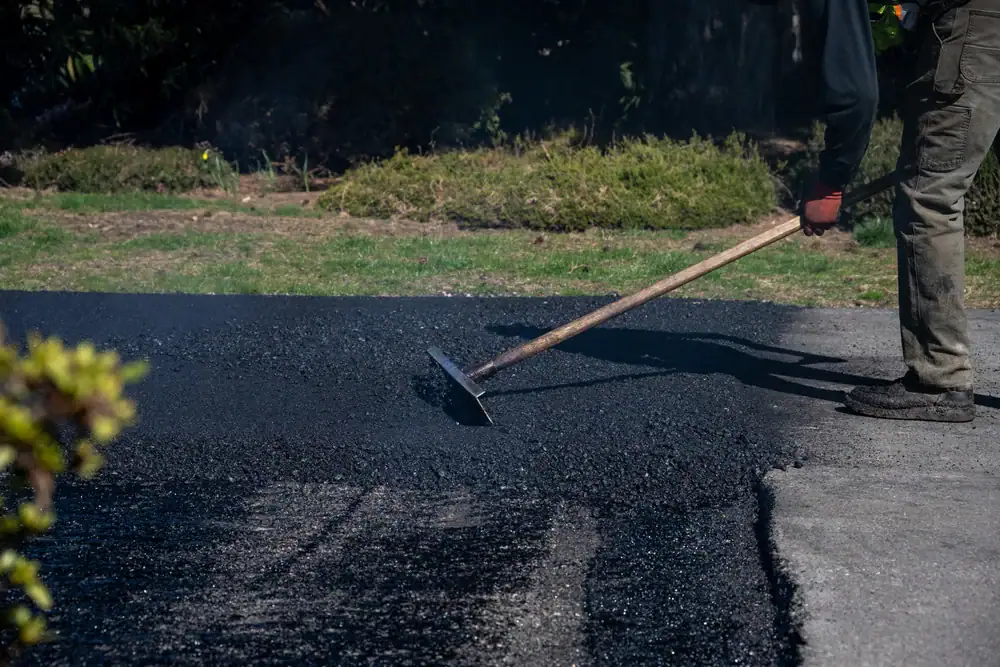
Next comes the first application. Hot liquid asphalt gets sprayed evenly across the base using specialized equipment. While it’s still hot, crushed stone chips are spread over the surface. The stone you choose determines what your driveway looks like—grey, tan, brown, whatever fits your property.
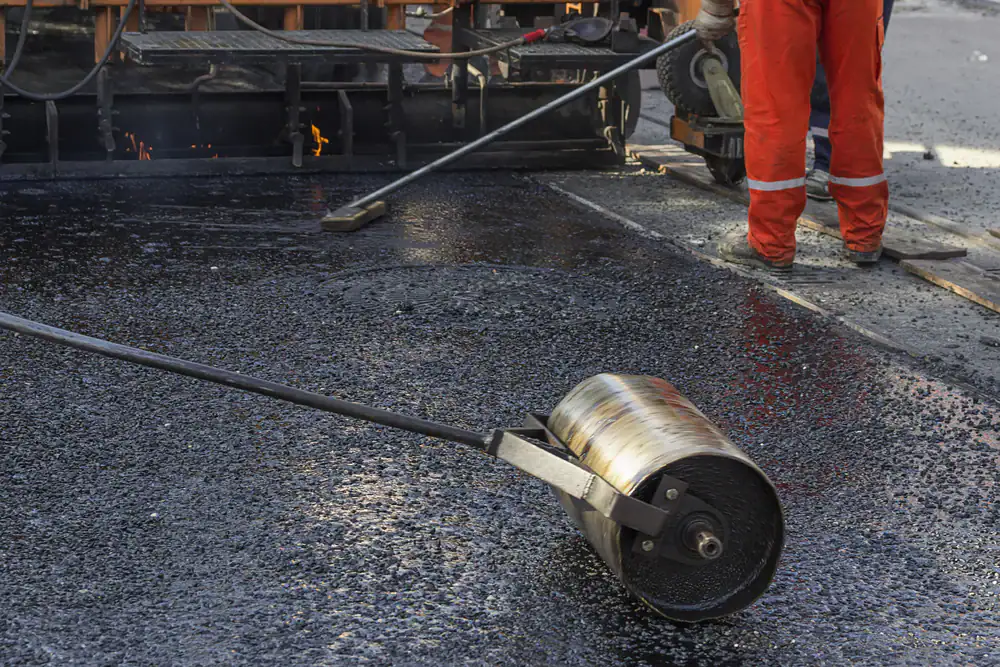
Then everything gets compacted. Heavy rollers press the stone chips into the hot asphalt, creating a bond that holds. This step matters. It’s what keeps the surface intact under traffic and weather.
The process repeats with a second layer—more hot asphalt, more stone, more compaction. Two layers create a stronger, longer-lasting surface. Once it cools and sets, usually within a day or two, your driveway is ready to use. No week-long curing period. No staying off it for days. Just a finished surface that’s ready when you are.

Ready to get started?
Vanleer properties often sit on larger lots with longer driveways. Paving a quarter-mile driveway with traditional asphalt can run $15,000 or more. Tar and chip brings that cost down significantly—sometimes by 30 to 40 percent—without sacrificing durability.
The textured surface works well in rural settings. It doesn’t look out of place next to barns, pastures, or wooded lots. The natural stone finish blends with the landscape instead of standing out like a parking lot. And because the surface isn’t smooth, it provides better traction when wet or icy—something that matters on sloped driveways or areas that don’t get much sun in winter.
Tennessee weather puts pavement through the test. Hot summers, freezing winters, heavy rain in spring. Tar and chip handles it. The surface expands and contracts naturally with temperature changes, which means fewer cracks than you’d see with rigid pavement. It doesn’t require sealcoating to protect it from UV damage or water intrusion. The stone layer is already exposed, so there’s nothing to break down.
Maintenance is minimal. Sweep off debris occasionally. Fill any potholes if they develop, though proper installation prevents most of that. If the surface starts to wear after several years, you can add another layer of tar and stone instead of tearing everything out and starting over. That’s it. No annual sealing. No crack filling every spring. Just a driveway that keeps working.

Expect 7 to 10 years, sometimes up to 15 with proper installation and a solid base. The lifespan depends on how well the foundation was prepared, how much traffic the driveway sees, and whether heavy vehicles use it regularly.
Tennessee’s freeze-thaw cycles can be hard on any pavement, but tar and chip handles it better than you might expect. The textured surface allows for natural expansion and contraction, which reduces cracking. If you notice wear after several years, you can add another layer of tar and stone to extend the life instead of replacing the entire surface.
The key is starting with a stable base. If the foundation shifts or settles unevenly, the surface will develop problems no matter what material you use. That’s why site preparation matters as much as the paving itself.
Yes, by a significant margin. Tar and chip typically costs 25 to 40 percent less than traditional asphalt. For a long rural driveway—say, 1,000 feet or more—that difference adds up fast. You’re looking at $2 to $5 per square foot for tar and chip compared to $3 to $7 or more for asphalt, depending on current oil prices and site conditions.
The cost savings come from the simpler installation process and the materials themselves. Tar and chip uses less refined asphalt product and relies on crushed stone for the surface layer. There’s no need for multiple layers of hot-mix asphalt or the heavy equipment required to lay and compact it evenly.
For Vanleer properties with quarter-mile driveways or private roads, tar and chip makes paving affordable when traditional asphalt would be out of reach. You still get a durable, weather-resistant surface—just at a price that fits a rural property budget.
No. Asphalt driveways need sealcoating every 3 to 5 years to protect the surface from UV damage, water intrusion, and oxidation. Tar and chip doesn’t require that. The stone layer is already exposed, so there’s no smooth asphalt surface that needs sealing.
Basic maintenance is simple. Sweep off leaves and debris so water can drain properly. If you get a pothole or a section where stones have loosened, patch it with cold-mix asphalt or call us to fix it. That’s about it. No scheduled resealing. No crack filling every spring unless something unusual happens.
The main thing to watch for is snow removal. If you plow your driveway in winter, keep the blade slightly above the surface. Aggressive plowing can dislodge stones and damage the top layer. A snowblower or shovel works fine and won’t harm the surface. Beyond that, tar and chip is one of the lowest-maintenance paving options available.
Yes, if the gravel base is stable and properly compacted. If your existing driveway has a solid foundation without major ruts, sinkholes, or drainage problems, tar and chip can be applied directly over it. The gravel essentially becomes the base layer, and the hot asphalt and stone create the finished surface on top.
If the existing base has issues—soft spots, poor drainage, uneven settling—those need to be addressed first. Paving over a bad foundation just transfers the problems to the new surface. We’ll assess the condition of your current driveway and let you know whether it’s ready for tar and chip or if it needs grading and compaction work first.
This is one reason tar and chip is cost-effective for rural properties. If you already have a gravel driveway that’s in decent shape, you’re halfway there. The installation goes faster, and you save on the cost of building a new base from scratch.
Tar and chip has a textured, natural appearance—more like a gravel driveway than smooth blacktop. The crushed stone chips create the visible surface, so the color and texture depend on the type of stone used. You can choose grey, tan, brown, or other stone colors to match your property’s look.
Asphalt is smooth and uniformly black when new, though it fades to grey over time. It has a clean, modern finish that works well for suburban driveways and commercial lots. Tar and chip has a rougher, more rustic look that fits rural settings, country homes, and properties where a natural appearance matters more than a polished finish.
Some people prefer the textured look because it blends with the landscape. Others like that it hides dirt and wear better than smooth asphalt. If you’re used to gravel but want something more permanent, tar and chip gives you a similar aesthetic with better durability and less maintenance. If you want a sleek, uniform surface, traditional asphalt might be a better fit.
Usually within 24 to 48 hours. Tar and chip sets faster than traditional asphalt because the process is simpler and the surface doesn’t require the same curing time. Once the hot asphalt cools and the stone chips are compacted into place, the driveway is essentially ready.
We recommend waiting at least a day before driving on it, just to make sure everything has set properly. Heavy traffic or sharp turns should be avoided for the first few days to prevent dislodging stones before the bond fully hardens. After that initial period, the surface is ready for normal use—cars, trucks, whatever you need to drive on it.
Compare that to traditional asphalt, which often requires several days to a week before it’s fully cured and ready for regular traffic. Tar and chip’s faster turnaround means less disruption to your daily routine. You’re not blocked from using your driveway for an extended period while waiting for the surface to harden.
Other Services we provide in Vanleer