

Hear from Our Customers
A properly paved surface does more than improve how your property looks. It protects your investment from water damage, prevents safety hazards, and eliminates the headache of dealing with cracks and potholes every few months.
When asphalt is installed correctly—with the right base preparation, proper drainage, and quality materials—it can last 20 to 25 years. That’s the difference between a surface that holds up and one that starts failing within a year or two.
You’re not just paying for asphalt. You’re paying for the peace of mind that comes from knowing the job was done right, by people who understand how Tennessee’s rain, humidity, and temperature swings affect pavement. No shortcuts. No wondering if it’ll hold up.
TriStar Paving LLC is a veteran-owned asphalt company based right here in Wilson County. With over 50 years of experience, we’ve seen what works and what doesn’t when it comes to paving in this area.
Suggs Creek properties deal with specific challenges—soil conditions, drainage issues, weather patterns that can wreck poorly installed asphalt. We know these challenges because we’ve been working in Wilson County long enough to understand what local properties actually need. Whether it’s a residential driveway or a commercial parking lot, our approach stays the same: do it right, use quality materials, and make sure it lasts.
Being veteran-owned means something here. It means showing up when promised, communicating clearly, and standing behind our work. No runarounds, no disappearing after the job is done.

The process starts with a site evaluation. We look at your property, discuss what you need, and check soil and drainage conditions. This step matters because what’s under the asphalt determines how long it lasts.
Next comes base preparation. The area gets graded and compacted to create a stable foundation. Skipping this or doing it poorly is why some driveways fail early. A solid base prevents settling, cracking, and water infiltration—the three things that destroy asphalt prematurely.
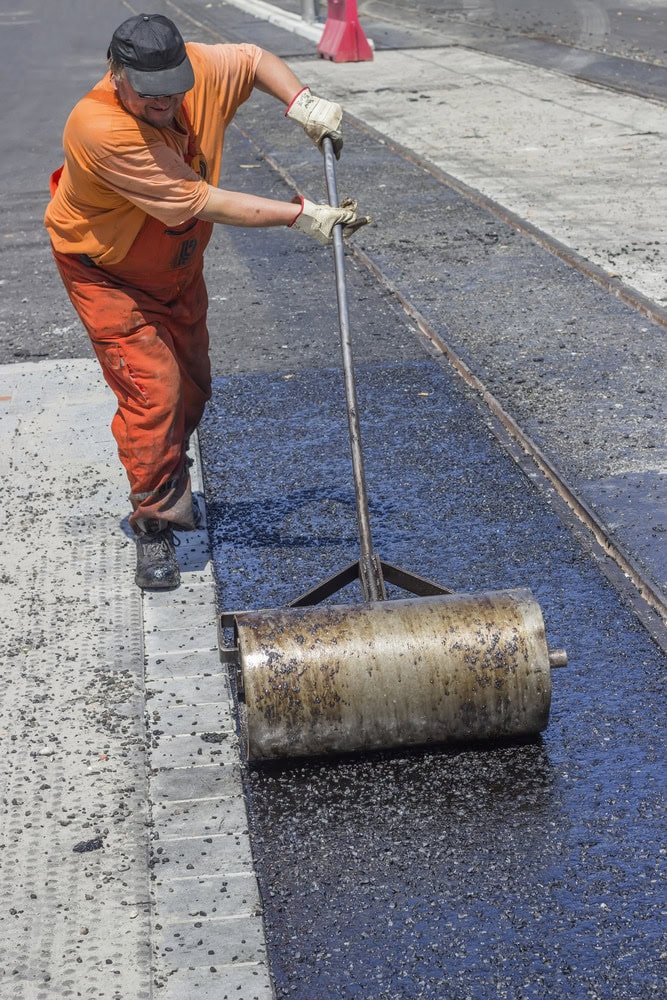
Then the asphalt goes down. Hot mix asphalt needs to be installed at the right temperature and compacted properly while it’s still hot. We use professional equipment and experienced crews to get this done efficiently. The final step is compaction with a vibratory roller, which ensures the surface is smooth, dense, and ready to handle traffic. You’ll know exactly what’s happening at each stage and how long before you can use the surface again.

Ready to get started?
We handle both residential and commercial paving projects across Suggs Creek and Wilson County. For homeowners, that means driveways that boost curb appeal and hold up to daily use. For businesses, it means parking lots that look professional, handle customer traffic, and don’t turn into liability issues.
We also offer tar and chip installations, which provide a cost-effective alternative to traditional asphalt while still delivering durability. It’s a good option for longer driveways or private roads where you want a different look without sacrificing performance.
Wilson County properties often deal with drainage challenges due to the area’s clay-heavy soil and frequent rainfall. We factor this into every project, making sure water moves away from the pavement instead of pooling and causing damage. Proper drainage can add years to your asphalt’s lifespan and prevent the kind of water-related problems that lead to expensive repairs. Whether you’re in Suggs Creek proper or the surrounding Wilson County area, we understand local conditions and build accordingly.

You can typically drive on new asphalt within two to three days after installation. But curing and driving are different things.
The full curing process takes about 20 to 30 days. During that time, the asphalt is hardening and reaching its full strength. You can use it, but you should avoid heavy loads, sharp turns while stationary, and parking in the same spot repeatedly during the first few weeks.
Tennessee’s heat and humidity actually affect curing time. Hot weather can speed things up slightly, but it also means the asphalt stays softer longer during the day. That’s why we recommend being extra careful with heavy vehicles or equipment during the first month. Once fully cured, your asphalt will handle normal traffic without issue for years.
Repair makes sense when damage is limited to specific areas and the base is still solid. If you have a few cracks, small potholes, or surface wear in isolated spots, patching or resurfacing can extend the life of your pavement without the cost of starting over.
Full replacement becomes necessary when more than 30 percent of the surface needs work, when cracks are wider than a quarter inch and deeper than two inches, or when the base itself has failed. If your driveway or parking lot has widespread settling, upheaval, or sections that are crumbling beyond repair, patching won’t fix the underlying problem.
The decision often comes down to cost versus longevity. Repairs are cheaper upfront but might only buy you a few more years. Replacement costs more initially but gives you a fresh start with decades of life ahead. We’ll tell you honestly which option makes sense for your specific situation, not just push the more expensive choice.
The base is what supports everything above it. Asphalt itself is only a few inches thick. Without a properly prepared base underneath, that asphalt will crack, settle, and fail no matter how well it’s installed.
Base preparation involves removing unsuitable material, grading for proper drainage, and compacting a layer of crushed stone or gravel—usually four to eight inches deep. This creates a stable platform that distributes weight evenly and prevents water from undermining the asphalt. In Wilson County, where clay soil is common, this step is even more critical because clay expands when wet and contracts when dry.
Contractors who skip or rush base prep might finish faster and charge less, but you’ll pay for it later with premature failure. Proper compaction with a vibratory roller ensures the base won’t shift or settle. It’s not the exciting part of paving, but it’s the part that determines whether your asphalt lasts five years or twenty-five.
Asphalt paving in the Nashville and Wilson County area typically runs between seven and fifteen dollars per square foot, including materials and labor. The average residential driveway project falls somewhere between three thousand and seven thousand dollars, depending on size and site conditions.
Several factors affect the final cost. If your property needs significant grading or drainage work, that adds to the price. The thickness of the base layer matters—properties with poor soil or drainage need a deeper, more substantial base. The thickness of the asphalt itself also varies based on expected use. A residential driveway might need three inches of compacted asphalt, while a commercial parking lot handling heavy traffic might need four or more.
The best approach is to get a detailed estimate based on your specific property. A site visit lets us assess soil conditions, drainage needs, and any prep work required. Be wary of estimates that seem unusually low—they often mean corners will be cut on base prep or material quality, which costs you more in the long run.
Asphalt doesn’t require constant attention, but some basic maintenance extends its life significantly. The most important step is sealcoating, which should be done six months to a year after installation, then every three years after that.
Sealcoating protects against UV damage, water infiltration, and chemicals like oil or gasoline. It’s basically a protective layer that prevents the asphalt from drying out and becoming brittle. Skipping sealcoating can cut years off your pavement’s lifespan.
You should also address cracks as soon as they appear. Small cracks let water seep into the base, where it causes much bigger problems through freeze-thaw cycles. Filling cracks while they’re still minor is cheap and prevents expensive repairs later. Keep the surface clean of debris, fix drainage issues promptly, and avoid letting heavy vehicles park in the same spot for extended periods. These simple steps can help your asphalt reach or exceed its 20-to-25-year lifespan.
Asphalt installation works best when temperatures are consistently above 50 degrees Fahrenheit, ideally between 70 and 90 degrees. Hot mix asphalt needs to be installed while it’s hot—typically between 300 and 350 degrees when it leaves the plant.
If the ground is too cold, the asphalt cools too quickly before it can be properly compacted. This leads to a weaker surface that’s more prone to cracking and premature failure. Cold weather also makes it harder to achieve proper compaction, which is critical for long-term durability.
In Tennessee, this usually means the best paving season runs from late spring through early fall. Some contractors can work in cooler weather using warm mix asphalt technology, which stays workable at lower temperatures. But generally, if you’re planning a paving project in Suggs Creek, you’ll get the best results by scheduling it during warmer months when conditions are ideal for proper installation and curing.
Other Services we provide in Suggs Creek